 Call Now:
Procurement Insights & Industry Updates
Explore the Latest Trends, Tips, and News in Procurement
Dive into expert articles, industry updates, and practical guides to help you navigate the world of tenders and procurement. Our blog is your resource for staying informed and ahead in your business journey.
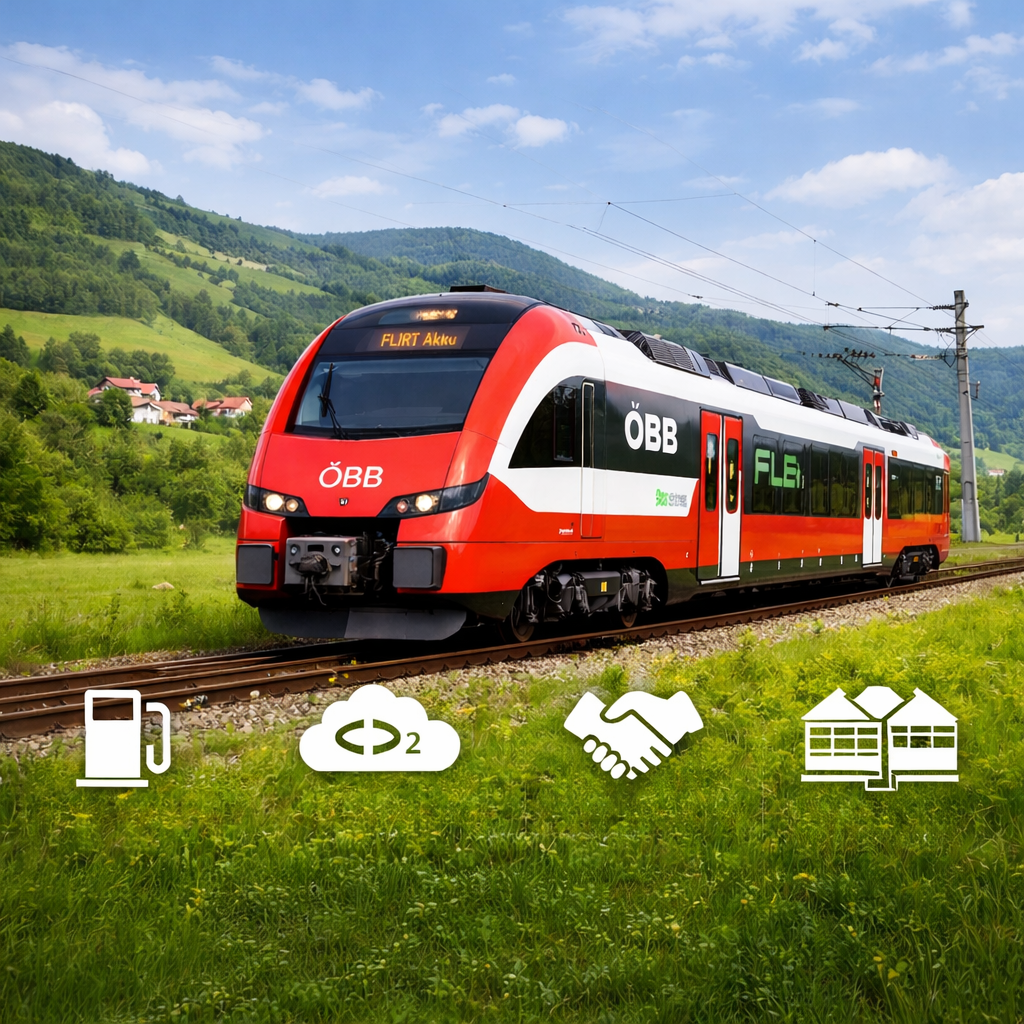
ÖBB Orders Seven More FLIRT Akku Battery Trains from Stadler
Last Modified: 3/23/2026
 By Team GoodTenders
Austrian rail operator ÖBB has ordered seven additional FLIRT Akku battery-powered electric trains from Swiss manufacturer Stadler as part of its strategy to modernize regional rail transport and reduce emissions.
The new trains will operate in Lower Austria and are scheduled for delivery in 2028, supporting the country’s transition toward cleaner and more efficient rail services.
Battery Trains for Non-Electrified Rail Lines
The FLIRT Akku trains are designed to operate both under traditional overhead electrification and on battery power when running on non-electrified sections. Energy is stored in onboard batteries and automatically used when the train travels beyond electrified track.
These trains will gradually replace diesel rolling stock from 2029, including services on the Kamptalbahn and Erlauftalbahn lines, enabling emission-free regional transport operations.
Passenger Comfort and Accessibility
According to the manufacturer, each train will offer more than 160 seats and will include modern passenger features such as step-free access for people with reduced mobility, dedicated space for bicycles and prams, as well as power sockets and USB-C charging ports.
Significant Diesel and Emissions Savings
The introduction of the seven battery-powered trains is expected to save approximately 500,000 liters of diesel per year compared to the diesel trains they will replace.
According to Stadler, the switch will also reduce CO₂ emissions by around 1,200 tons annually, supporting Austria’s wider rail decarbonization goals.
Part of a Larger Fleet Agreement
The new order forms part of a framework agreement signed in 2023 between ÖBB and Stadler for up to 120 FLIRT Akku trains. The initial order included 16 trains intended for deployment on the Kamptalbahn line.
This expansion further strengthens Austria’s push toward sustainable regional rail transport and highlights the growing role of battery-powered trains in replacing diesel operations across Europe.